
United Nations Office of Drugs and Crime
Committee Description
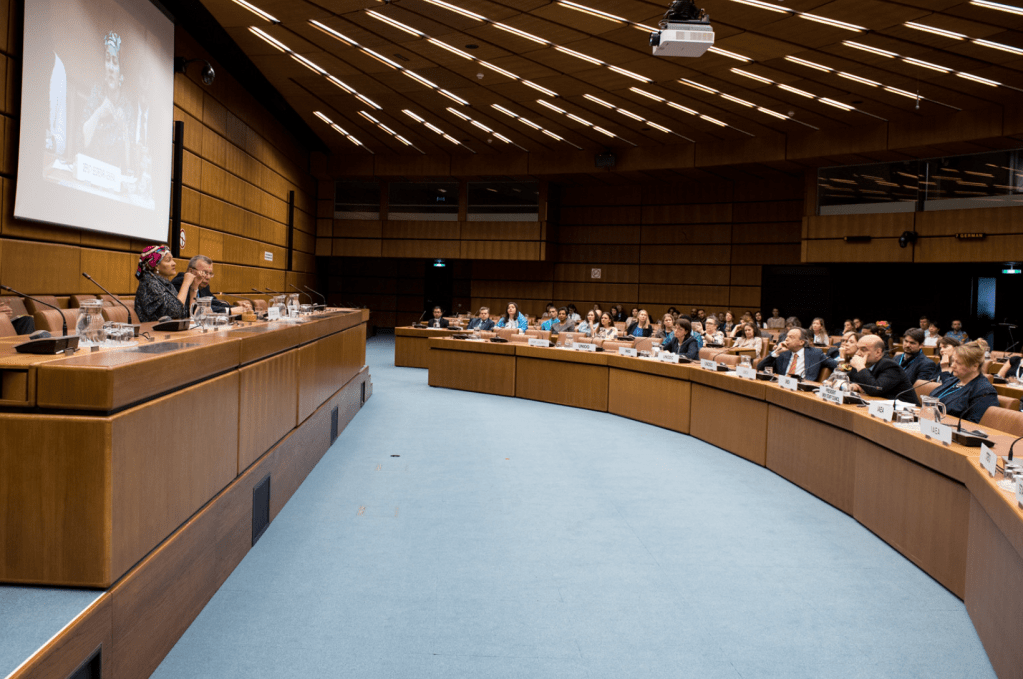
Established in 1997, the United Nations Office on Drugs and Crime (UNODC) was created to assist member states in addressing global challenges related to illicit drugs, transnational organised crime, corruption, and terrorism. With headquarters in Vienna, Austria, the UNODC was formed through the merger of the United Nations Drug Control Programme (UNDCP) and the Centre for International Crime Prevention (CICP).
The UNODC operates with a commitment to promoting health, security and justice, guided by the principles of the United Nations Charter. Aligned with the 2030 Agenda for Sustainable Development, the secretariat office targets Goal 3 (Good Health and Well-Being) and Goal 16 (Peace, Justice and Strong Institutions). Drug prevention, treatment and rehabilitation are at the forefront of its initiatives and are driven by fair justice systems and health-centred approaches. The work of UNODC involves technical assistance, policy guidance and research-based support to help member states strengthen law enforcement, reduce crime and promote human rights within criminal justice systems.
Beyond its core functions, the UNODC serves as a center for global knowledge, publishing analytical reports, trend studies and guidelines that shape how governments respond to emerging threats. Its mandate extends to combating human trafficking and migrant smuggling, addressing wildlife and environmental crime, countering cybercrime, and supporting anti-corruption bodies in building transparent and accountable governance structures.
This committee is ideal for delegates interested in exploring the interrelationship between international security, public health, human rights and criminal justice. Delegates are invited to find cooperative and innovative solutions that sustain global security and safety through complex debates and discussions.
The TTAC is responsible for regulating time travel and preventing dangerous paradoxes. Delegates from all over the world come together to debate how time travel should be used, ensuring it doesn’t cause harm. Their mission is to keep history safe and the future secure, guarding against any misuse of this powerful technology.
Topic A – Expansion of Synthetic Drug Markets
The rise of synthetic drugs, such as fentanyl, methamphetamine, and new psychoactive substances, has transformed the global drug trade. Unlike traditional plant-based drugs, synthetics can be manufactured cheaply, rapidly, and in virtually any location, making them far harder to track and regulate. Their potency, ease of distribution, and constantly evolving chemical formulas pose a challenge to existing laws and overwhelm border control efforts. Delegates must explore how the international community can respond to this fast-growing and increasingly sophisticated sector of the illicit drug market.
Topic B – Combating the Interrelationship Between Drug Trafficking and Organized Crime
Drug trafficking remains one of the most profitable activities of transnational organized crime, funding corruption, violence and other illicit activities. The UNODC is committed to addressing this global challenge by strengthening law enforcement, promoting international cooperation, and supporting the implementation of the UN Convention against Transnational Organized Crime (UNTOC). As criminal groups adopt new technologies and exploit weak law enforcement systems, tackling this challenge requires collaboration and action on a global scale. In this topic, delegates will explore strategies to dismantle drug trafficking networks, strengthen border security and promote fair yet effective criminal justice systems.
Dais

Ella Han
Director
Contact: ellahan.w@gmail.com

Rubina Khan
Chair
 Canada Model United Nations